The Death of Syntax? Why "English as a Programming Language" is the Trend of 2026 Meta Description: Explore why English as a programming language dominates 2026 with AI-native development platforms, prompt engineering for devs, GitHub Copilot alternative 2026 tools, low-code AI app builders, and the Rust vs Go for backend debate. The software development landscape has entered a transformative period where natural language increasingly replaces traditional programming syntax. Industry observers note that "English as a programming language" has emerged as one of the most significant trends shaping development practices in 2026. This paradigm shift challenges fundamental assumptions about how software gets created, who can create it, and what skills define a competent developer. The Rise of AI-Native Development Platforms AI-native development platforms represent a departure from conventional integrated development environments by treating natural language as a primary input method. These platforms interpret developer intent expressed in plain English, generating corresponding code implementations across multiple programming languages and frameworks. Unlike traditional development tools that assist with code completion or syntax checking, AI-native development platforms function as collaborative systems capable of architecting entire applications from conversational descriptions. Developers describe desired functionality, system requirements, and technical constraints using natural language, while the platform proposes implementation approaches, generates code structures, and identifies potential issues. Major technology companies and startups have released AI-native development platforms that handle backend services, frontend interfaces, database schemas, and API integrations through conversational interfaces. These systems maintain context across extended development sessions, allowing developers to refine implementations through iterative dialogue rather than manual code modification. The adoption of AI-native development platforms has accelerated particularly among organizations building internal tools, prototypes, and minimum viable products where development speed takes priority over highly optimized custom implementations. Traditional development workflows remain prevalent for performance-critical systems, but the threshold for when natural language development becomes viable continues rising. Prompt Engineering for Devs: A New Core Competency As natural language interfaces proliferate, prompt engineering for devs has emerged as an essential skill set distinct from traditional programming knowledge. Prompt engineering for devs involves crafting precise instructions that AI systems can reliably interpret and execute, understanding model capabilities and limitations, and structuring requests to achieve desired outcomes. Effective prompt engineering for devs requires familiarity with how language models process information, including token limits, context windows, and instruction following capabilities. Developers learn to decompose complex requirements into sequences of prompts that build upon previous outputs, creating development workflows that leverage AI strengths while mitigating weaknesses. Educational institutions and professional training programs now offer courses specifically focused on prompt engineering for devs, covering topics such as few-shot learning techniques, chain-of-thought prompting, and error recovery strategies. This specialization reflects recognition that successfully directing AI systems requires distinct expertise from writing code manually. The value of prompt engineering for devs extends beyond individual productivity improvements. Organizations establish prompt libraries, best practices, and quality standards for natural language interactions with development tools, treating prompt engineering as infrastructure rather than ad hoc skill. GitHub Copilot Alternative 2026: Expanding Options The market for AI-assisted coding tools has diversified significantly, with numerous GitHub Copilot alternative 2026 platforms offering distinct approaches to development assistance. These GitHub Copilot alternative 2026 solutions range from specialized tools focused on specific programming languages to comprehensive platforms handling entire project lifecycles. Several prominent GitHub Copilot alternative 2026 options emphasize different philosophical approaches. Some prioritize code explanation and learning features, helping developers understand generated suggestions rather than simply accepting them. Others focus on team collaboration, allowing multiple developers to interact with shared AI assistants that maintain consistent code style and architectural decisions across projects. Open-source communities have developed GitHub Copilot alternative 2026 tools that can be self-hosted and customized for organizational needs. These alternatives appeal to enterprises with strict data governance requirements or specialized development environments where public cloud-based assistants prove impractical. The proliferation of GitHub Copilot alternative 2026 platforms has created a competitive environment, driving rapid innovation in AI-assisted development capabilities. Developers now select tools based on factors including programming language support, integration with existing workflows, privacy features, and specific assistance modalities like test generation, documentation writing, or refactoring suggestions. Low-Code AI App Builders Democratize Development Low-code AI app builders extend natural language development concepts beyond professional software engineers to business analysts, designers, and domain experts. These platforms combine visual development interfaces with conversational AI assistants, enabling application creation without traditional programming knowledge. Advanced low-code AI app builders handle authentication systems, database operations, business logic, and user interface design through guided conversations and template selections. Users describe application requirements, specify data structures, and define workflows using domain-specific terminology rather than technical programming concepts. The sophistication of low-code AI app builders has reached a point where they generate production-ready applications for numerous business use cases. Organizations deploy internal tools, customer portals, and workflow automation systems built entirely through low-code platforms, reducing dependence on professional development resources for routine applications. Professional developers increasingly interact with low-code AI app builders not as end users but as platform customizers who extend capabilities, create reusable components, and establish guardrails ensuring generated applications meet technical standards. This creates hybrid development models where natural language interfaces handle routine implementation while specialists focus on complex logic and performance optimization. Rust vs Go for Backend: Traditional Languages Evolve Despite trends toward natural language development, the Rust vs Go for backend debate remains relevant as developers select implementation languages for AI-generated code. The Rust vs Go for backend discussion centers on performance characteristics, memory safety guarantees, concurrency models, and ecosystem maturity. Rust advantages in the Rust vs Go for backend comparison include zero-cost abstractions, guaranteed memory safety without garbage collection, and fine-grained control over system resources. These characteristics make Rust attractive for performance-critical services, embedded systems, and security-sensitive applications where runtime overhead proves unacceptable. Go strengths in the Rust vs Go for backend evaluation involve simpler syntax, faster compilation times, built-in concurrency primitives, and extensive standard library support for web services. Organizations appreciate Go's balance between performance and development velocity, particularly for microservices architectures and cloud-native applications. AI-native development platforms and low-code AI app builders often generate code in multiple languages, prompting developers to understand when to specify Rust vs Go for backend implementations. The choice increasingly depends on specific application requirements rather than developer syntax preferences, as natural language interfaces abstract away much manual coding regardless of target language. Implications for Software Development The trend toward English as a programming language raises questions about developer education, software quality, and the future role of traditional programming skills. While natural language interfaces lower barriers to software creation, they also require new forms of expertise around AI system direction, output validation, and architectural decision-making. The development profession continues evolving, integrating traditional engineering principles with emerging AI collaboration paradigms.
The Death of Syntax? Why “English as a Programming Language” is the Trend of 2026

Explore why English as a programming language dominates 2026 with AI-native development platforms, prompt engineering for devs, GitHub Copilot alternative 2026 tools, low-code AI app builders, and the Rust vs Go for backend debate.


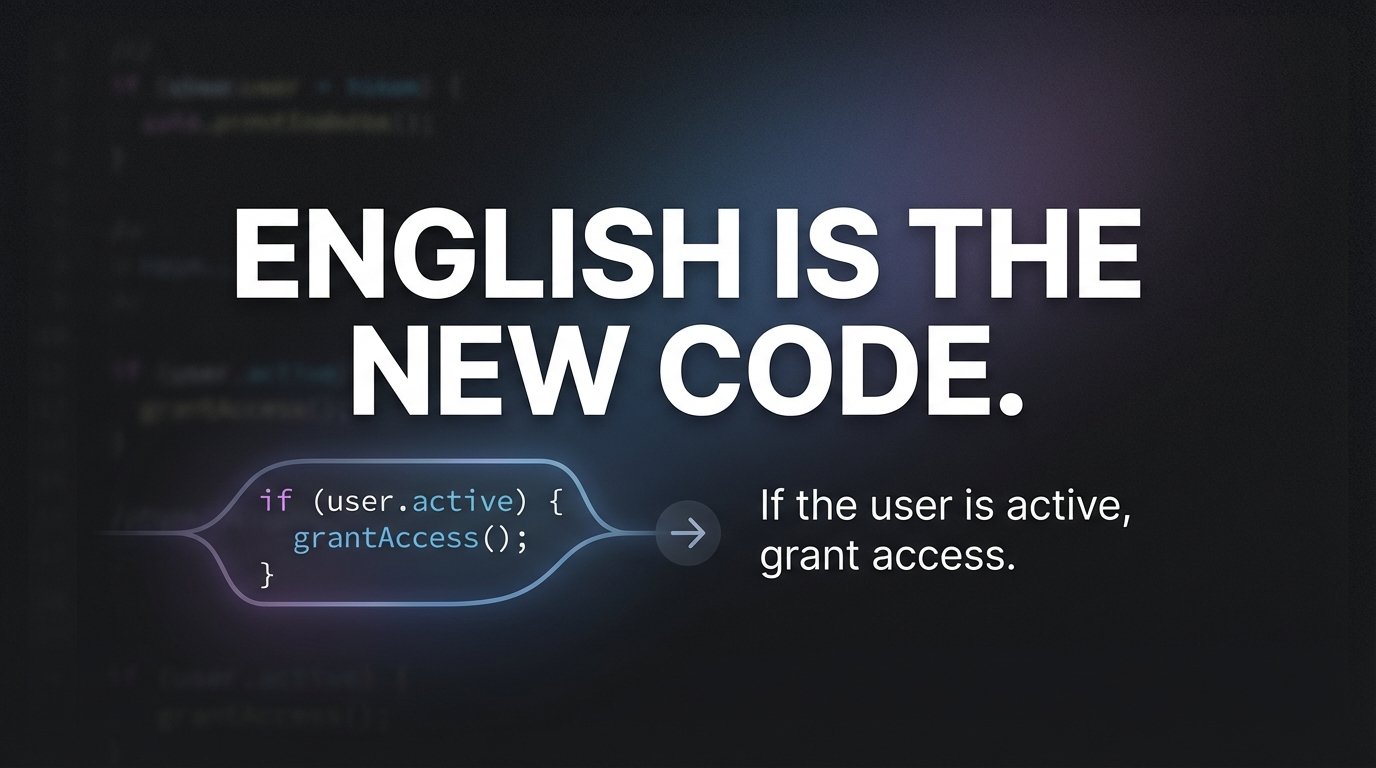
The software development landscape has entered a transformative period where natural language increasingly replaces traditional programming syntax. Industry observers note that “English as a programming language” has emerged as one of the most significant trends shaping development practices in 2026. This paradigm shift challenges fundamental assumptions about how software gets created, who can create it, and what skills define a competent developer.

The Rise of AI-Native Development Platforms

AI-native development platforms represent a departure from conventional integrated development environments by treating natural language as a primary input method. These platforms interpret developer intent expressed in plain English, generating corresponding code implementations across multiple programming languages and frameworks.

Unlike traditional development tools that assist with code completion or syntax checking, AI-native development platforms function as collaborative systems capable of architecting entire applications from conversational descriptions. Developers describe desired functionality, system requirements, and technical constraints using natural language, while the platform proposes implementation approaches, generates code structures, and identifies potential issues.

Major technology companies and startups have released AI-native development platforms that handle backend services, frontend interfaces, database schemas, and API integrations through conversational interfaces. These systems maintain context across extended development sessions, allowing developers to refine implementations through iterative dialogue rather than manual code modification.

The adoption of AI-native development platforms has accelerated particularly among organizations building internal tools, prototypes, and minimum viable products where development speed takes priority over highly optimized custom implementations. Traditional development workflows remain prevalent for performance-critical systems, but the threshold for when natural language development becomes viable continues rising.

Prompt Engineering for Devs: A New Core Competency

As natural language interfaces proliferate, prompt engineering for devs has emerged as an essential skill set distinct from traditional programming knowledge. Prompt engineering for devs involves crafting precise instructions that AI systems can reliably interpret and execute, understanding model capabilities and limitations, and structuring requests to achieve desired outcomes.

Effective prompt engineering for devs requires familiarity with how language models process information, including token limits, context windows, and instruction following capabilities. Developers learn to decompose complex requirements into sequences of prompts that build upon previous outputs, creating development workflows that leverage AI strengths while mitigating weaknesses.

Educational institutions and professional training programs now offer courses specifically focused on prompt engineering for devs, covering topics such as few-shot learning techniques, chain-of-thought prompting, and error recovery strategies. This specialization reflects recognition that successfully directing AI systems requires distinct expertise from writing code manually.

The value of prompt engineering for devs extends beyond individual productivity improvements. Organizations establish prompt libraries, best practices, and quality standards for natural language interactions with development tools, treating prompt engineering as infrastructure rather than ad hoc skill.

GitHub Copilot Alternative 2026: Expanding Options

The market for AI-assisted coding tools has diversified significantly, with numerous GitHub Copilot alternative 2026 platforms offering distinct approaches to development assistance. These GitHub Copilot alternative 2026 solutions range from specialized tools focused on specific programming languages to comprehensive platforms handling entire project lifecycles.

Several prominent GitHub Copilot alternative 2026 options emphasize different philosophical approaches. Some prioritize code explanation and learning features, helping developers understand generated suggestions rather than simply accepting them. Others focus on team collaboration, allowing multiple developers to interact with shared AI assistants that maintain consistent code style and architectural decisions across projects.

Open-source communities have developed GitHub Copilot alternative 2026 tools that can be self-hosted and customized for organizational needs. These alternatives appeal to enterprises with strict data governance requirements or specialized development environments where public cloud-based assistants prove impractical.

The proliferation of GitHub Copilot alternative 2026 platforms has created a competitive environment, driving rapid innovation in AI-assisted development capabilities. Developers now select tools based on factors including programming language support, integration with existing workflows, privacy features, and specific assistance modalities like test generation, documentation writing, or refactoring suggestions.

Low-Code AI App Builders Democratize Development

Low-code AI app builders extend natural language development concepts beyond professional software engineers to business analysts, designers, and domain experts. These platforms combine visual development interfaces with conversational AI assistants, enabling application creation without traditional programming knowledge.

Advanced low-code AI app builders handle authentication systems, database operations, business logic, and user interface design through guided conversations and template selections. Users describe application requirements, specify data structures, and define workflows using domain-specific terminology rather than technical programming concepts.

The sophistication of low-code AI app builders has reached a point where they generate production-ready applications for numerous business use cases. Organizations deploy internal tools, customer portals, and workflow automation systems built entirely through low-code platforms, reducing dependence on professional development resources for routine applications.

Professional developers increasingly interact with low-code AI app builders not as end users but as platform customizers who extend capabilities, create reusable components, and establish guardrails ensuring generated applications meet technical standards. This creates hybrid development models where natural language interfaces handle routine implementation while specialists focus on complex logic and performance optimization.

Rust vs Go for Backend: Traditional Languages Evolve

Despite trends toward natural language development, the Rust vs Go for backend debate remains relevant as developers select implementation languages for AI-generated code. The Rust vs Go for backend discussion centers on performance characteristics, memory safety guarantees, concurrency models, and ecosystem maturity.

Rust advantages in the Rust vs Go for backend comparison include zero-cost abstractions, guaranteed memory safety without garbage collection, and fine-grained control over system resources. These characteristics make Rust attractive for performance-critical services, embedded systems, and security-sensitive applications where runtime overhead proves unacceptable.

Go strengths in the Rust vs Go for backend evaluation involve simpler syntax, faster compilation times, built-in concurrency primitives, and extensive standard library support for web services. Organizations appreciate Go’s balance between performance and development velocity, particularly for microservices architectures and cloud-native applications.

AI-native development platforms and low-code AI app builders often generate code in multiple languages, prompting developers to understand when to specify Rust vs Go for backend implementations. The choice increasingly depends on specific application requirements rather than developer syntax preferences, as natural language interfaces abstract away much manual coding regardless of target language.

Implications for Software Development

The trend toward English as a programming language raises questions about developer education, software quality, and the future role of traditional programming skills. While natural language interfaces lower barriers to software creation, they also require new forms of expertise around AI system direction, output validation, and architectural decision-making. The development profession continues evolving, integrating traditional engineering principles with emerging AI collaboration paradigms.

Similar Posts

Leave a Reply

Your email address will not be published. Required fields are marked *